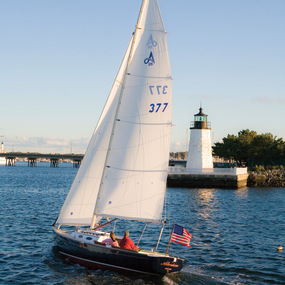
Dozens of dinghy designs have tried to bridge the gap between the Optimist and a more performance-oriented doublehanded dinghy, but it’s one of those niches that kids, and designers, still haven’t figured out an across-the-board answer for. Designer Jim Taylor witnessed the problem firsthand as he watched his own children and those he coached struggle to make the transition from the Opti to a doublehanded dinghy. Some children, lacking the skills, experience and sometimes strength to sail a Club 420, lost interest and fell out of the sailing fold.
Taylor describes designing the Transit 380 as a “busman’s holiday.” He said he used his own experience as background and then took into account the recommendations of junior sailing instructors and coaches to come up with a boat that really does bridge the gap.
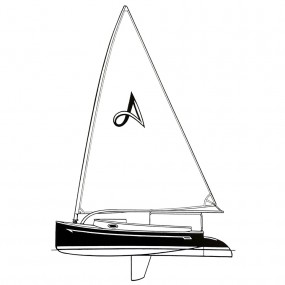
The Transit 380 is just under 13 feet long with a mainsail, jib and spinnaker, designed to be sailed by two 11- to 15-year-olds with a combined weight of about 220 pounds. Many young sailors find themselves literally scared out of the boat when they get in a high-performance 420 and end up either out of control or capsizing more than they’d like to. Despite being a more stable platform the Transit will still capsize from time to time, but the watertight mast, foam in the head of the mainsail and low buoyancy side decks should make righting the boat easier for kids. Once it’s back on its feet, the cockpit is self-bailing. Closed cell foam flotation will not absorb water even if the boat is holed.
Built by Precision Boat Works, the boat is intended to be popular among sailing schools, junior sailing programs and camps, and it is for sale only to these organizations. At 260 pounds rigged, the boat will require a couple of people to move it but in a school context, that shouldn’t be a problem.