|
A lesson in how to turn people off of sailing
"PEOPLE who wonder why more people don't take up sailing-and people in the business of sailing are always wondering that-should read the story about learning to sail in the September 1, 2003, issue of the "South Jersey Courier-Post." I read it, and this is what I learned: Sailing is a complicated activity that is difficult to learn, physically demanding, likely to result in capsizing and hard to pursue as a recreation because it's expensive and there aren't many opportunities to do it.
If this doesn't jibe with your perceptions of sailing, don't blame the writer, a young reporter named Eileen Sullivan. She wrote an honest account of what it was like for an adult who had never been on a sailboat to be introduced to the mysteries of sailing. Her story is well done and rather amusing-Ms. Sullivan wasn't bashful about including plenty of self-deprecating asides that portray her as something less than a natural sailor-but it isn't pretty, at least from the perspective of someone who would like to see the sport of sailing grow.
To get a story for her newspaper's series entitled "Thrills Down the Shore," the reporter signed up for a sailing lesson at a yacht club on a bay off the Intracoastal Waterway. The price was right-the three-hour session cost only $45.
It started with some safety tips, including an admonition to wear a life preserver when sailing (good advice) and when on docks (not something a fit woman in her 20s who had been a lifeguard needed to hear). After some orientation, Ms. Sullivan was sent out on a Sunfish and proceeded to be introduced to sailing by repeatedly capsizing. She explained to readers that the instructor "forces his students to flip so that they know how and what to expect." Obviously, tipping over was what to expect.
Sure enough, after the intentional capsizing part was over, she did it purely by accident. The instructor's "unwavering confidence in his own skills as a teacher," she wrote, "was no comfort to me as I flipped the boat over and over again."
Even when the boat stayed upright, sailing techniques did not come easily and most attempts at tacking ended with the boat stuck in a marsh. After the lesson, she could barely lift her arms, a result of the "pulling and pushing and flinging myself into the boat" she had to endure to experience sailing.
Ms. Sullivan proved she was a good sport by ending her story with some kind words for sailing: "And for those fleeting moments when I actually got it, when I was indeed sailing on my own, and was not close to the marsh, it was perfect."
Even so, I can't imagine many people who read the piece wanting to try sailing. If they weren't turned off by the degree of difficulty and discomfort, they probably were by the challenge of finding a way to go sailing, characterized by this paragraph: "With membership dues and rental fees, I'd have to fork over about $440 to the Cooper River Yacht Club just to get on the water."
Does anyone wonder why sailing is slipping on lists of Americans' preferred recreational activities?
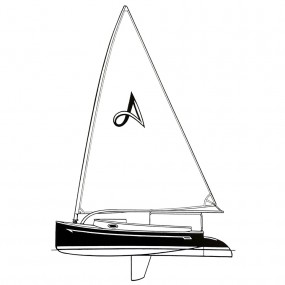
To be fair, Ms. Sullivan's experience was probably not typical. Her teacher was a high school senior. He was certified as an instructor and no doubt a good sailor, but his approach was better suited to a 10-year-old than an adult. So was the boat. As marvelous a sailboat as the Sunfish is, it's still a board with a sail. I don't buy the theory that everyone has to learn to sail a small boat before they can sail a big one. Folks ought to be able to try sailing without being tossed in the drink by boats that tip over. There are places that teach sailing on the water and not in it.
Community sailing centers, which provide adult instruction in dry, stable keelboats at reasonable cost and then offer the new sailors access to boats without the expense of ownership, are good solutions to the problems the newspaper story illuminated. It seems there just aren't enough of them.
I realize that making new sailors is hardly a front-burner concern for the sailing public, some of whom might prefer to share anchorages and marinas with fewer, not more, sailors and boats. In my case, I'll admit that having more sailors around to become readers of SAILING is one reason I want sailing to grow. But I also want to see it because sailing is energized by people new to the sport, fresh faces to join our yacht clubs, take part in cruising rallies and compete in races.
That is happening, but ever so slowly. Fine, sailing is never going to be as popular as, say, snowmobiling, because it demands too much from its participants, and I don't mean money. It shouldn't be anywhere near as daunting as it was presented in that New Jersey sailing lesson, but there are arcane skills to learn, and a willingness to be exposed to nature at its fickle worst and experience a whiff of risk are part of the package. Come to think of it, that might be what sailing has going for it. If you pass those tests, you're a little bit special.
So here's the new sailing marketing slogan: "It's not easy, but it's worth it." The slogan, however, comes with a disclaimer-"Capsizing not required."
* * *
The latest on Vitali and Marina
On June 27, Vitali Bondarenko was taken from his family in the midst of their circumnavigation on a 28-foot sailboat and put in jail by immigration authorities. He is still there, but now many SAILING readers who learned of his plight in last month's Full and By column want to help. We've received numerous calls and e-mails offering support for the Russian sailor and his family.
The family was sailing from the Bahamas to Nova Scotia as part of a their around-the-world voyage when Vitali radioed the U.S. Coast Guard for permission to refuel at Block Island. The Coast Guard allowed it, but insisted he report to the Immigration and Naturalization office in Newport, Rhode Island. "We told them we didn't have visas, but they assured us no immigration issues would arise," Marina said. At Newport, Vitali was taken into custody and put in the Bristol County House of Corrections. When we left his wife Marina and their two sons, ages 5 and 10, in last month's column, they were living on the boat on a mooring in Newport harbor, getting by on charity.
Here's an update from Marina on developments since then:
Life has improved aboard the boat, which is now at a dock with electricity for lights and a TV, courtesy of the Newport Harbor Hotel and Marina. A benefactor provides some money for everyday needs, and the Seamen's Church Institute of Newport remains a steadfast source of support, providing meals and help in making the boat shipshape. Winter looms, however, and Marina doesn't know where they will live when the boat needs to be hauled.
Nothing has improved for Vitali. Marina said he is despairing. He has lost 50 pounds, and her once burly, athletic husband now looks much older than his 55 years.
There is a ray of hope in a hearing that has been set for October 15. His lawyer has argued that because the alleged illegal entry was forced by the Coast Guard, there are no grounds to keep Vitali in jail. A judge could order him released.
Marina said she has been informed by the INS that if he is released, they would have to leave the country immediately. "We would be escorted to international waters and not be allowed to turn back, and it is hurricane season. I don't know what we would do in our little boat, maybe try to get to Bermuda."
Vitali and Marina left Russia in their homebuilt sailboat in 1991.
Marina Bondarenko can be contacted at (401) 662-2513 or through the Seamen's Church Institute at (401) 847-4260. Mail can be sent to her in care of the Institute, 18 Market Square, Newport, Rhode Island 02840.
|